
CISO Stress Levels Decrease When Regulatory Compliance Is Baked Into the Foundation of the Messaging Tool Rather Than Added as an Afterthought
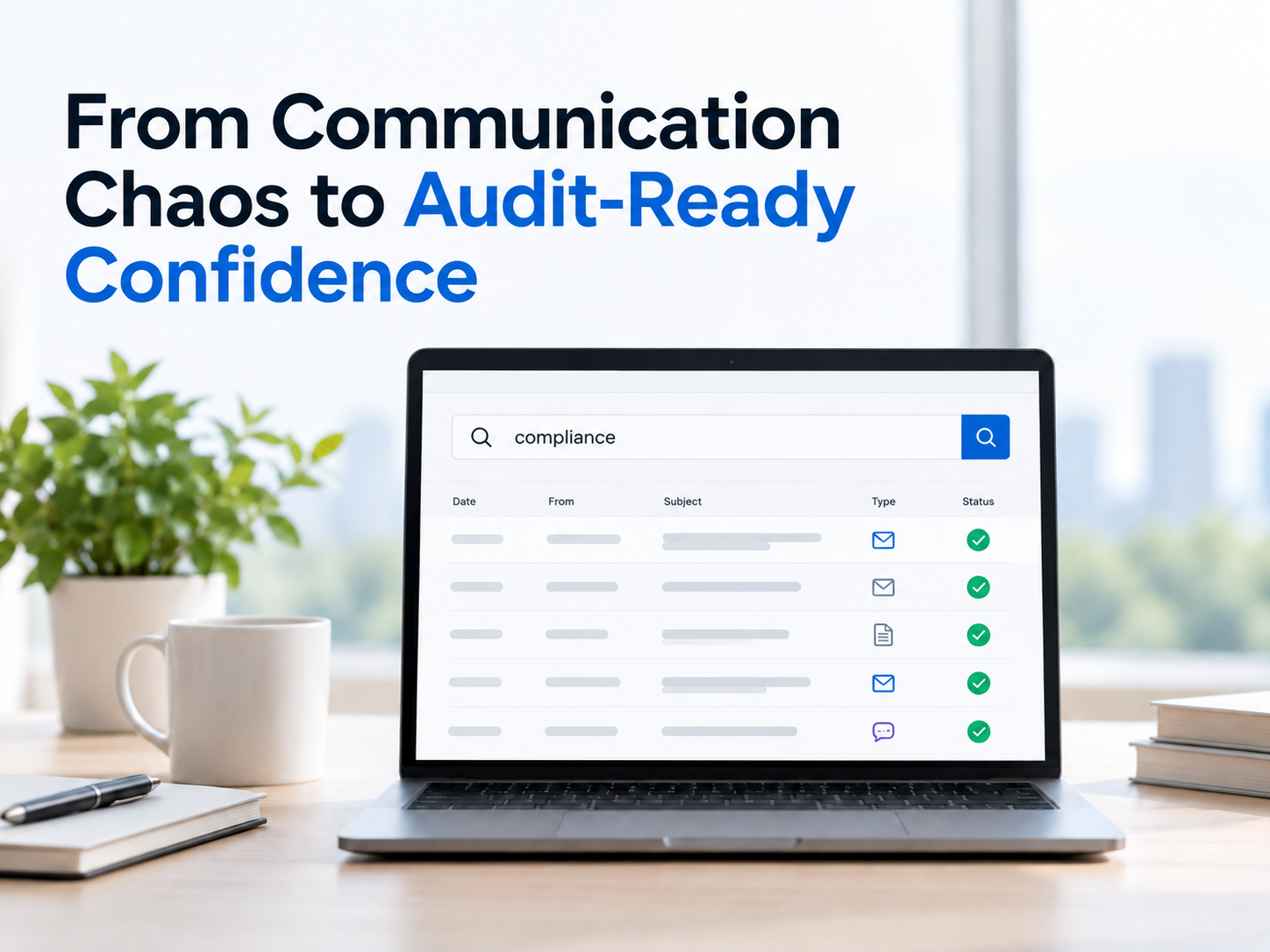
Every Chief Information Security Officer eventually encounters the same uncomfortable moment.
A regulator requests communication records from an event that happened months ago. The legal team needs evidence within days. Information technology teams begin pulling emails from one archive, chat messages from another, and shared files from yet another system. Hours turn into days. Questions multiply.
Nobody is completely certain whether every conversation has been preserved—or whether an employee accidentally used an unauthorized messaging application that escaped oversight.
It is not always a technology failure. More often, it is the result of years of adding compliance controls after communication tools were already in place.
MailSPEC has spent years helping organizations rethink that model. And rather than treating compliance as another layer to bolt onto existing systems, the company approaches communication from a different starting point: build the rules, governance, and security into the communication infrastructure itself. That subtle shift changes more than audit outcomes. It changes how security leaders manage risk every day.
The conversation is no longer simply about deploying another compliant messaging platform. It is about reducing operational friction before it becomes operational risk.
Why a Compliant Messaging Platform Changes the Job of a Security Leader
Many executives assume compliance work begins when auditors arrive. Experienced security leaders know better. Compliance begins with thousands of everyday decisions that employees make without thinking.
Someone forwards a confidential document. Someone shares customer information through a personal messaging application. Someone uploads sensitive files into an unsanctioned cloud folder because it is faster.
Again, none of those actions are usually malicious. They happen because people naturally choose the easiest workflow available.
That creates an exhausting reality for information security teams. Instead of improving communication, they spend countless hours monitoring exceptions, investigating incidents, reviewing logs, and proving that policies were followed.
The irony is hard to ignore.
Many organizations purchase additional monitoring software every year while continuing to rely on communication systems that were never designed for regulatory oversight in the first place.
The result is predictable: more alerts, more manual reviews, and more opportunities for human error.
Legacy Compliance Bolt-Ons Create More Work Than They Remove
There is an old saying among architects that it is far easier to design a building with fire exits than to add them after construction. Enterprise communications work the same way.
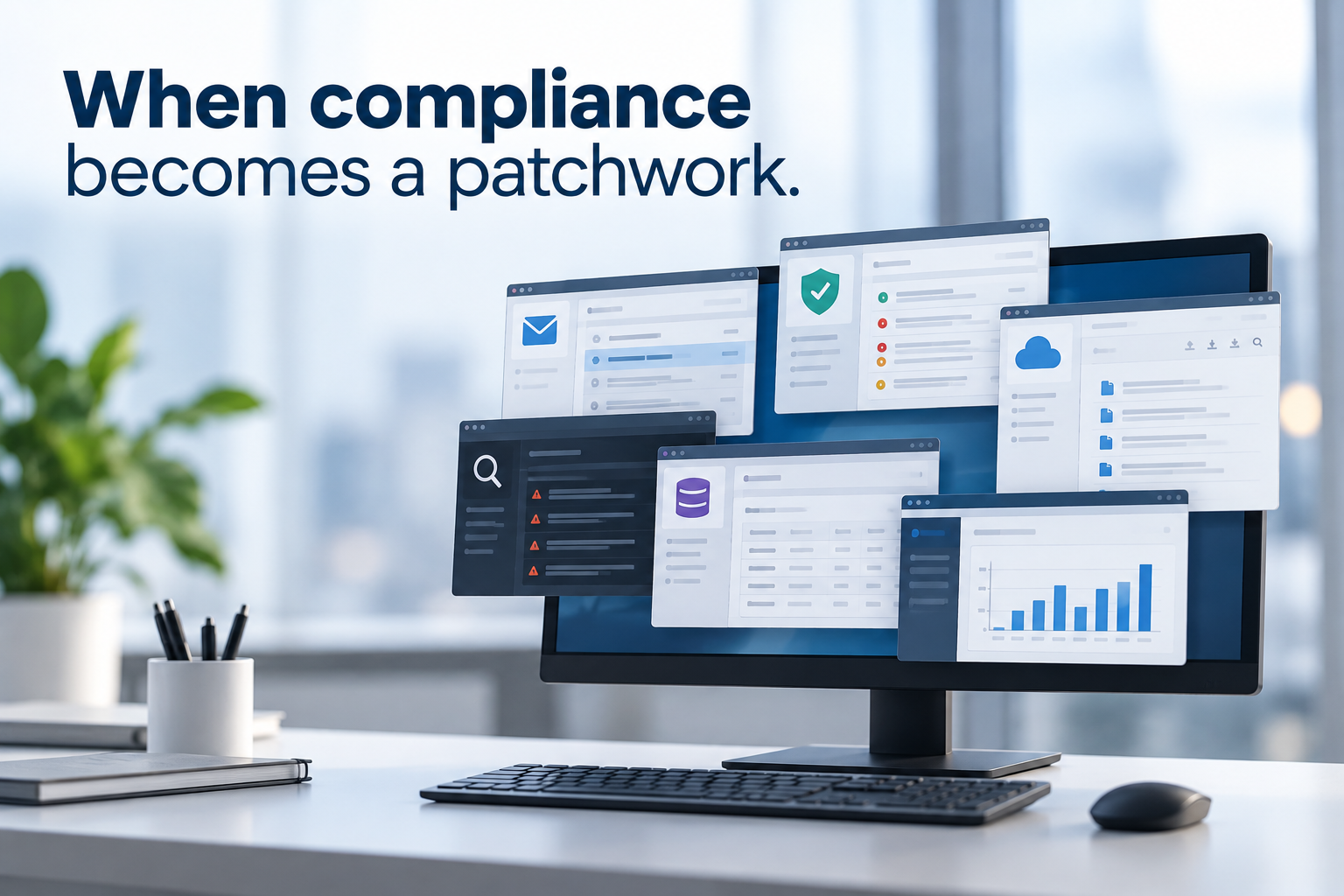
Legacy messaging environments often depend on separate tools for encryption, retention, monitoring, auditing, policy management, and record retrieval. Each solves one problem, yet collectively they introduce complexity that few teams truly control.
Security analysts end up switching between dashboards. Compliance officers export reports from multiple systems. Legal departments struggle to reconstruct conversations spread across email, chat, and file-sharing platforms.
Every manual step creates another opportunity for mistakes.
Perhaps a record is overlooked. Perhaps metadata is incomplete. Perhaps someone archived the wrong version.
Over time, the biggest cost becomes neither software licensing nor infrastructure. It becomes fatigue. Exhausted teams rarely produce better compliance outcomes.
Privacy by Design Is Becoming the Sustainable Model for Global Communication
One of the most important ideas within the General Data Protection Regulation is Privacy by Design, described under Article Twenty-Five.
Its message is surprisingly straightforward. Privacy should not be added later. It should exist from the very beginning.
That philosophy extends well beyond European regulation. Organizations operating across multiple jurisdictions increasingly discover that building privacy into communication systems is easier than continually adapting disconnected technologies to meet changing rules.
This is why many compliance professionals now prefer a compliance-first messaging platform over collections of independent security products.
When governance becomes part of everyday communication instead of an afterthought, employees rarely need to change how they work.
The system quietly enforces policy while people remain focused on business. That distinction matters. Compliance succeeds when users barely notice it.
Secure Compliant Messaging Should Reduce Decisions, Not Create More
One overlooked source of compliance failures is decision fatigue.
Imagine asking every employee to remember:
- Which files require encryption
- Which conversations require retention
- Which jurisdictions have different privacy rules
- Which recipients are authorized
- Which records must remain immutable
Eventually, someone forgets. Not because they are careless. Because no person can consistently remember hundreds of communication rules while also doing their primary job.
Modern secure compliant messaging should remove those decisions whenever possible.
Instead of asking employees to interpret policies, organizations can automate them. That shift changes compliance from reactive policing into proactive governance.
The Quiet Value of an Always-On Digital Compliance Officer
This is where MailSPEC's JACE Compliance System enters the conversation naturally.
Rather than acting like another monitoring application, JACE behaves more like an always-available digital compliance officer operating continuously in the background. It watches communication before problems become incidents.
Its policy engine can identify sensitive information, apply metadata, enforce organizational rules, and ensure communications are archived appropriately without requiring employees to remember every regulation themselves.
Equally important, the analysis occurs without transferring sensitive communication to external public artificial intelligence services.
That supports MailSPEC's broader philosophy around Client-Side Artificial Intelligence, Zero Sensitive Data Transfer, and Communication Sovereignty.
For security teams already overwhelmed with alerts, that distinction matters. The objective is not to generate more warnings. The objective is to prevent preventable mistakes.
Audit Readiness Should Be a Daily State, Not an Annual Project

Many organizations unknowingly treat audit preparation as a temporary event.
Several weeks before regulators arrive, teams begin collecting documents, reconstructing conversations, locating archived files, and validating records.
That approach creates unnecessary stress because audit readiness becomes something organizations achieve periodically instead of continuously.
A mature enterprise compliant messaging strategy works differently.
Every communication is retained according to policy. Every message carries appropriate metadata. Every authorized reviewer knows where records exist. Every audit trail remains immutable.
The result is confidence rather than panic. Instead of asking, "Can we prove compliance?"
Organizations begin asking, "What insight can our communication records provide?"
And that is a remarkably different conversation.
Compliance Is Slowly Becoming a Business Asset
Many executives still describe compliance as overhead. That perspective is changing.
Well-governed communication increasingly produces operational intelligence beyond regulatory reporting.
Accurate records accelerate investigations. Reliable audit trails reduce legal uncertainty. Consistent metadata improves information discovery. Automated policy enforcement decreases operational interruptions.
In other words, the same systems that satisfy regulators also help organizations make better business decisions. Compliance becomes infrastructure rather than administration. This may be one of the most overlooked competitive advantages available to large enterprises.
The organizations investing in governance today are also building cleaner, more trustworthy information environments for tomorrow.
Communication Infrastructure Has Become Executive Infrastructure
Cybersecurity discussions often focus on firewalls, identity management, and endpoint protection. Communication receives less attention. Yet every important decision inside an organization eventually becomes a message.
Approvals. Contracts. Customer conversations. Engineering discussions. Executive strategy.
If communication systems are fragmented, compliance becomes fragmented as well. If communication infrastructure is governed from its foundation, operational resilience improves almost automatically. That is why messaging should no longer be viewed as simple collaboration software. It has become critical governance infrastructure.
Looking Beyond Compliance
Perhaps the biggest misconception about regulatory technology is that it exists only to satisfy auditors.
The strongest communication platforms accomplish something much more valuable.
They reduce uncertainty. They reduce human error. They reduce operational friction.
When governance is embedded into every message rather than layered onto communication afterward, security leaders spend less time chasing problems and more time improving resilience.
That is ultimately the direction enterprise communication is heading—not toward more monitoring, but toward smarter design.
MailSPEC reflects that philosophy by combining secure communications, Policy Enforcement, Compliance Automation, Immutable Audit Trails, and Communication Sovereignty into a communication environment where compliance is built into the foundation rather than continually added on top.
For organizations preparing for increasingly complex regulatory expectations, that approach offers something every Chief Information Security Officer values: confidence that communication remains secure, compliant, and audit-ready before anyone asks for proof.
Rethinking how compliance fits into its communication strategy?
Explore how communication infrastructure designed around governance from day one can strengthen operational resilience while reducing complexity for both security and compliance teams.
.avif)