What is Private Messaging and How Does it Secure Online Payments for Global Users?
It usually happens in a moment of trust.
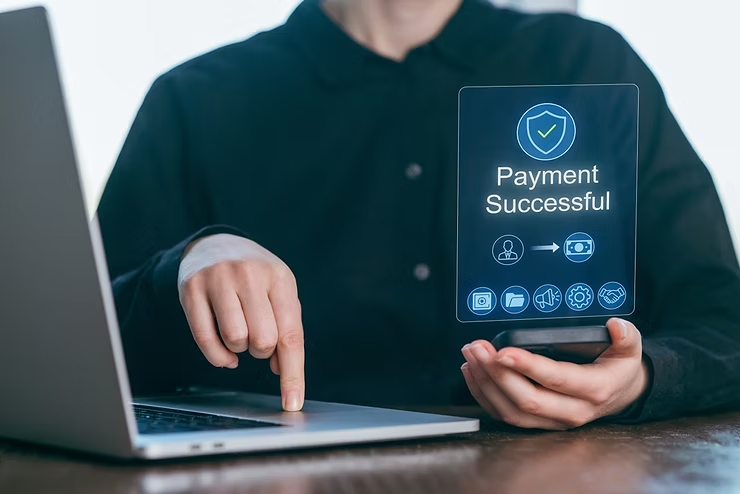
You receive a message confirming a payment.
A request to verify an account detail.
A notice that a transaction needs your attention.
For global users making online payments every day, sure, these messages feel routine.
But behind the scenes? They carry some of the most sensitive information a person can share: identity details, payment confirmations, account references, and personal data.
MailSPEC works with organizations that move this kind of information at scale, across borders, time zones, and regulatory environments. And what we see is clear: secure online payments depend just as much on how information is communicated as on how money is transferred.
And that is where private messaging becomes essential.
Understanding Private Messaging for Secure Online Payments
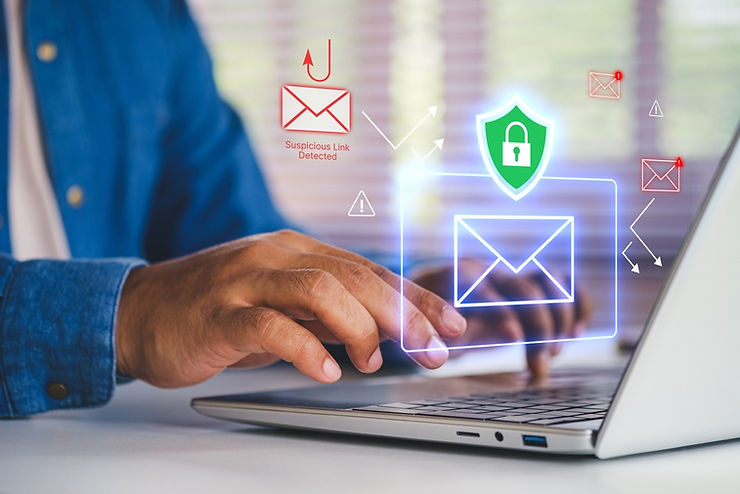
Private messaging is often misunderstood as simply “encrypted chat.” In reality, it is a controlled communication environment designed specifically to protect sensitive conversations.
When we talk about private messaging for secure online payments, we are talking about systems that:
- Encrypt messages from sender to recipient
- Control who can access the conversation
- Prevent messages from being altered or erased
- Create verifiable records for compliance and dispute resolution
Also, unlike standard messaging tools, private messaging is built with financial risk in mind. It assumes that every message may contain information that could be misused if intercepted.
And for global payment platforms, this level of protection is not optional. It is foundational.
How Companies Like PayPal and eBay Communicate Safely With Users
Global payment platforms operate under constant threat. Fraud attempts, impersonation scams, and data interception are daily realities.
Companies such as PayPal and eBay do not rely on open email or consumer messaging tools to handle sensitive communication. Instead, they use secure digital payment communication systems that create protected channels between the platform and the user.
These systems allow them to:
- Confirm transactions without exposing payment details
- Notify users of account activity securely
- Resolve disputes without sending sensitive data over open networks
From the user’s perspective, it feels simple. A message arrives inside a secure environment. But behind that simplicity is a layered system of encryption, authentication, and access control.
This is the model that private messaging brings to secure online payments.
The Hidden Risks of Unencrypted Payment Communication
Many fraud cases do not begin with a breach of a payment processor. They begin with a message.
A fake payment confirmation.
A copied support request.
A fraudulent message that looks real enough to act on.
When payment information or identity details are sent over standard, unencrypted channels, several risks appear:
- Messages can be intercepted in transit
- Content can be altered without detection
- Users cannot verify the sender’s authenticity
- Sensitive details may be stored in insecure systems
And these risks grow as platforms scale globally. Different regions have different levels of network security, device protection, and regulatory enforcement.
This is why secure messaging for online payments is now considered part of fraud prevention, not just customer communication.
Private Messaging as a Secure Tunnel for Financial Conversations
One of the easiest ways to understand private messaging is to imagine a secure tunnel.
Inside that tunnel:
- Messages are encrypted from start to finish
- Only verified participants can enter
- Activity is monitored and logged
- Content cannot be silently changed or removed
This tunnel then protects every step of a financial conversation. Whether it is a payment confirmation, a refund discussion, or an identity verification request, the message never leaves the protected environment.
For users, this means fewer opportunities for fraud. For platforms, it means fewer disputes and stronger trust.
And this is the core of private messaging payment security.
How Encrypted Messaging Protects Everyday Users From Fraud

Most users do not think about encryption. They think about whether a message feels safe.
Private messaging systems are designed to protect users even when they are not security experts. They do this by removing common points of failure.
Encrypted messaging for transactions helps by:
✔️ Preventing third parties from reading messages
✔️ Ensuring messages come from verified sources
✔️ Reducing exposure of personal and payment details
✔️ Creating clear records if something goes wrong
And when users know that payment-related messages only appear in a secure environment, they become less vulnerable to impersonation and phishing attempts.
Especially important for global users who may be interacting in multiple languages, currencies, and regulatory systems.
Why Global Payment Platforms Need Security That Works Everywhere
Online payments do not just stop at borders.
A user in Europe may be paying a seller in Asia through a platform based in North America. Each step introduces new risks and new regulatory expectations.
Private messaging systems used for secure online payments MUST work globally.
That means:
- Strong encryption regardless of location
- Consistent access controls across regions
- Compliance with multiple data protection laws
- Reliable performance in varied network conditions
MailSPEC designs communication systems with this reality in mind. Global platforms cannot rely on security models that only work well in one region. Secure digital payment communication must be universal.
The Role of Compliance in Secure Payment Messaging
Security alone is not enough. Payment communication must also meet regulatory requirements.
Many regions require:
- Proof of consent for data processing
- Secure handling of personal information
- Verifiable records of communication
- Controlled access to sensitive data
Private messaging systems support these requirements by design. They create audit-ready records without exposing content unnecessarily. Important for platforms operating across jurisdictions where regulatory expectations differ, but enforcement is strict.
How MailSPEC Supports Secure Payment Communication
MailSPEC provides communication tools built for environments where security, trust, and compliance intersect.
Rather than offering consumer-style messaging with added controls, MailSPEC builds private messaging systems that assume sensitive data is always in play.
For secure online payments, the following tools are especially relevant:
Pulse
Pulse provides secure real-time messaging designed for sensitive communication. Messages are encrypted, access is controlled, and logs cannot be altered or erased. Ideal for payment-related conversations that require trust and traceability.
EasyCrypt
EasyCrypt ensures that payment-related email communication is encrypted automatically. Sensitive data is protected both in transit and at rest, reducing exposure across global networks.
PassLink
PassLink allows the secure exchange of documents such as invoices, payment confirmations, or identity verification files. Access is verified, activity is logged, and files expire automatically.
JACE Compliance System
JACE ensures that all payment communication is recorded, indexed, and managed according to policy. This supports both fraud investigation and regulatory compliance without exposing users to unnecessary risk.
Together, these tools form a private messaging ecosystem that supports secure online payments at scale.
Why Private Messaging Is Becoming the Standard for Payment Communication
As fraud tactics become more sophisticated, payment platforms are shifting their focus. So, instead of asking users to be more careful, they are redesigning communication itself.
Private messaging reduces the opportunity for fraud by:
✔️ Limiting where sensitive messages appear
✔️ Making impersonation harder
✔️ Providing clear verification signals
✔️ Keeping sensitive data out of open channels
This approach protects users without requiring them to understand security details. And that is why private messaging for secure online payments is no longer a premium feature. It is becoming the baseline.
The Future of Secure Online Payments Is Communication-Driven
Payment security is often discussed in terms of encryption algorithms and transaction systems. But increasingly, the weakest link is communication.
Messages are where trust is built or broken.
Private messaging strengthens that trust by creating a safe space for financial conversations. It protects users, supports compliance, and scales across borders.
MailSPEC helps organizations build these environments so that secure online payments remain secure not just in theory, but in everyday use.
Talk to MailSPEC About Secure Payment Communication
If your organization handles online payments across regions, private messaging is not just a security upgrade. It is a trust strategy.
Learn how secure, compliant messaging systems can protect your users, your transactions, and your reputation globally.